Guides
Signs of tooth decay in toddlers parents often miss
Everyone knows to look for a hole. By the time there is a hole, the decay has been underway for a while. The early signs are quieter, and they are the ones worth learning, because that is the stage where very little needs to be done.
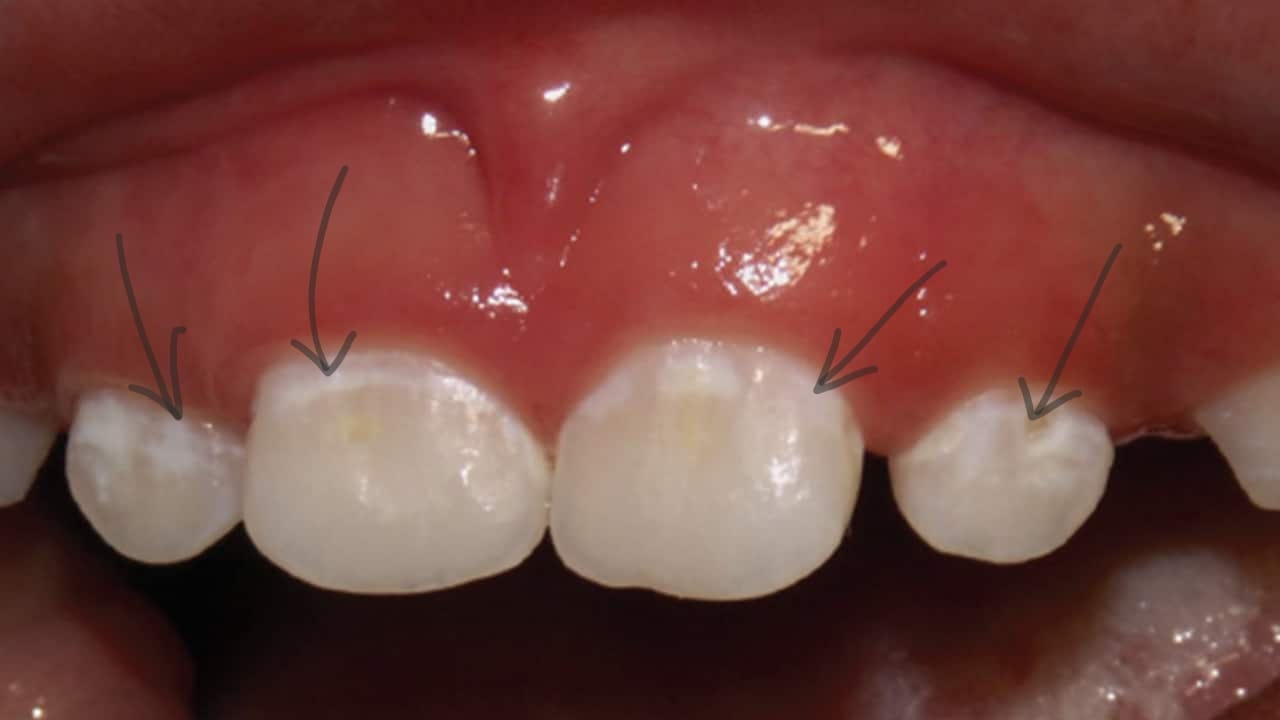
The chalky white line at the gumline
This is the one parents miss most. A dull, chalky band where the tooth meets the gum, usually on the upper front teeth, easiest to see when the teeth are dry. It does not look like damage, it looks like a smudge. It is enamel losing minerals, and it is the last stage that can still be turned around.
Colour that is not quite right
Yellow, brown or grey shading, often starting near the gumline or in the grooves of the back teeth. A dark line between two teeth can be decay sitting exactly where a toothbrush never reaches.
Changes in how your child eats
Small children rarely say a tooth hurts. They change their behaviour instead.
- Chewing on one side, or refusing food they used to like.
- Flinching at cold water, ice cream, or sweet things.
- Eating slowly, or leaving harder foods on the plate.
- Broken sleep with no obvious cause.
Breath and gums
Persistent bad breath in a child who brushes, or gums that are puffy and red along one tooth, are both worth a look. So is a small bump on the gum above a tooth, which should always be seen quickly.
How to check at home
Once a week, lift the top lip and look along the gumline in good light. It takes ten seconds. That single spot is where early decay in toddlers shows up first, and it is also the area a quick brush at the end of a long day is most likely to skip.