Treatments
Fluoride varnish at the dentist: what it is and why we recommend it
Fluoride varnish is a small, sticky coating painted onto the teeth at a checkup. It takes about a minute, it does not hurt, and it is one of the few things in dentistry that can strengthen a tooth which has already begun to weaken.
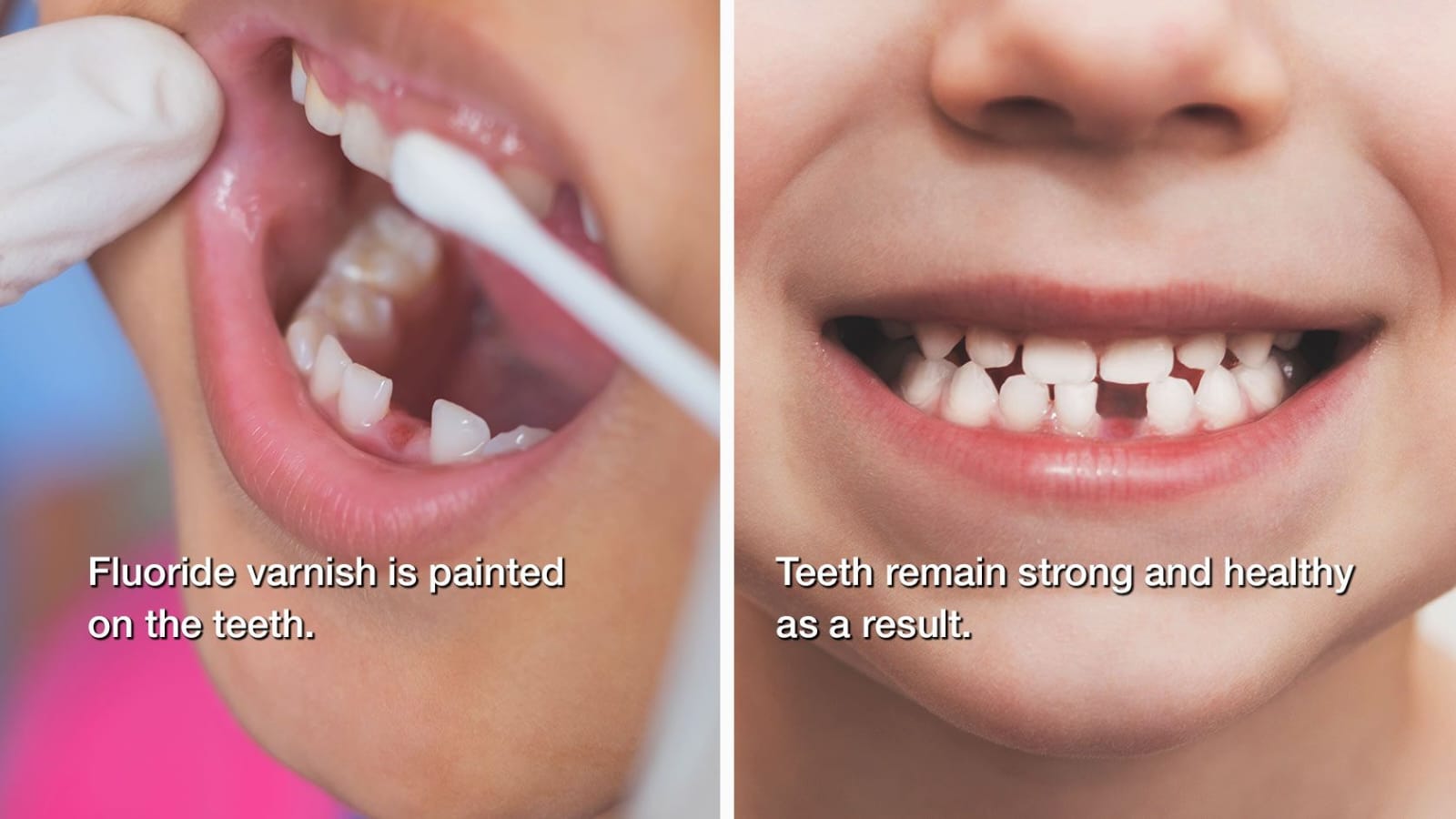
What it actually is
A concentrated fluoride in a resin base that sets on contact with saliva, so it stays put instead of being swallowed or rinsed away. It is brushed on with a small applicator, tooth by tooth. Children usually find it more interesting than unpleasant.
What it does
Enamel is constantly losing and regaining minerals. Fluoride shifts that balance towards regaining them, hardens the surface against acid, and slows the bacteria producing that acid.
This is why an early white spot is often treated with varnish and one change at the sink rather than a filling. At that stage the tooth can still repair itself, and varnish is what tips it.
What the appointment looks like
- The teeth are dried with gauze or a soft brush.
- The varnish is painted on. About a minute for a full set.
- It sets straight away. Your child can talk, drink water, and get on with the day.
- The teeth may look faintly yellow or dull for a few hours. That is the coating, and it brushes off.
Afterwards
Soft food and no hot drinks for a few hours, and skip brushing until the next morning so the varnish gets its full time on the tooth. We will tell you exactly when to brush again before you leave.
How often
Usually at routine checkups, and more often for a child at higher risk of decay. It is not a substitute for brushing and it is not a one-time fix. It is one steady, low-effort thing that keeps a small problem from becoming a big one.